
We all worry about mosquito bites, especially when it comes to our children. We slather on repellent and tuck them under nets, mostly thinking about diseases like Dengue or Malaria. But there’s another serious, mosquito-borne threat that every parent in India should be aware of: Japanese Encephalitis (JE).
Don’t let the name fool you; this disease is a significant concern right here at home. But knowledge is power. Let’s break down what JE is, how it spreads, and most importantly, how you can protect your child, with guidance from India’s top pediatric experts.
What Exactly Is Japanese Encephalitis? 🦟
Think of Japanese Encephalitis as a severe infection caused by a tiny germ, a virus. This virus is carried by mosquitoes, specifically the Culex variety, which loves to breed in flooded rice fields and stagnant water common in rural, semi-urban and even some parts of Urban areas.
But the story of how it gets to humans is a bit of a loop.
- The Factory (Amplifying Hosts): The JE virus doesn’t just live in mosquitoes. It finds a “factory” in animals like pigs and wading birds (like herons). In these animals, the virus multiplies rapidly to very high numbers.
- The Delivery Truck (Mosquitoes): A mosquito bites an infected pig or bird, picks up the virus, and becomes a carrier.
- The Accidental Stop (Humans): This infected mosquito then bites a human. This is how a person gets the virus.
An important point is that humans are “dead-end” hosts. This means that if a person is infected, the virus’s journey ends there. They cannot pass it on to another person or back to a mosquito. The real cycle happens between mosquitoes and pigs/birds.
From a Simple Bite to a Serious Illness: What Happens in the Body?

For the vast majority of people (more than 99%!), a bite from an infected mosquito results in either no symptoms at all or a very mild, short-lived flu-like illness. The body’s defense system fights it off without any trouble.
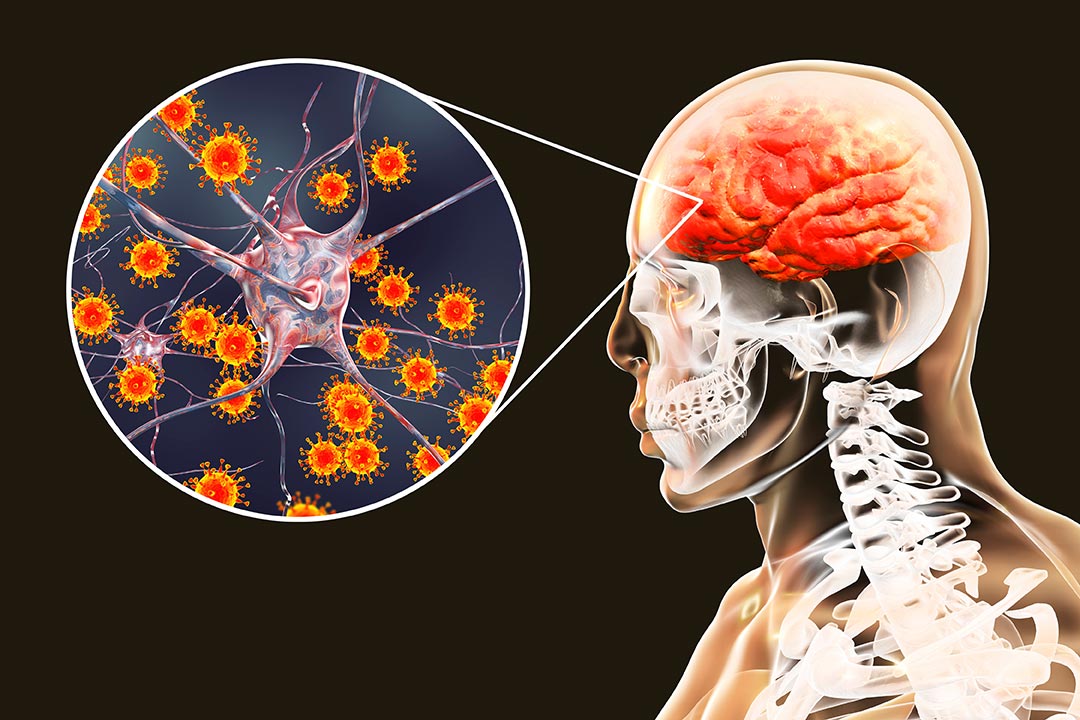
However, in a small fraction of cases (about 1 in 250), the virus manages to get past the body’s defenses and travel to the brain. 🧠
When the virus enters the brain, it causes severe swelling or brain inflammation, which is what “encephalitis” means. The body’s immune system rushes to the brain to fight the virus, and this intense battle is what causes the dangerous symptoms of the disease.

The early symptoms can be deceptive and look like a regular flu:
- Sudden high fever
- Headache
- Vomiting and feeling sick
But as the brain becomes affected, the danger signs appear, usually within a few days:
- A stiff neck
- Confusion or strange behavior
- Extreme sleepiness or difficulty waking up
- Seizures (fits or jerky movements), especially in children
- Weakness or inability to move parts of the body
JE is a medical emergency. If a child shows these signs, especially after a flu-like illness, they need immediate medical attention. Sadly, even with the best hospital care, JE can be fatal. For those who survive, many are left with long-term problems like learning disabilities, paralysis, or recurrent seizures.
JE in India: A Local Reality
Japanese Encephalitis is a major public health issue in India. It is endemic (meaning it’s consistently present) in over 15 states, with Assam, Bihar, Uttar Pradesh, West Bengal, and parts of the South being particularly affected. Outbreaks are common, especially during and after the monsoon season when mosquito populations boom. As recently as 2025, states like Assam and Nagaland have battled outbreaks, reminding us that this threat is current and real.
Your Shield Against JE: The Vaccine (IAP Recommended) 🛡️

Given how serious JE is and that there is no specific cure, prevention is everything. And our best tool for prevention is a safe and effective vaccine.
The Indian Academy of Pediatrics (IAP), the country’s leading body of child health experts, strongly recommends the JE vaccine for all children living in or traveling to areas where the disease is found. Following years of success in high-risk districts, the JE vaccine is now a proud part of India’s National Immunization Schedule.
Here is the simple, two-dose schedule you need to know:
The 2 dose 💉💉schedule may be given separately at 12 and 13 months age respectively. In national schedule that is implemented by the government, for operational efficiency and to avoid miss-outs, the vaccine is combined with other vaccines.
- 💉 First Dose: Given between 9 to 12 months of age. It’s usually administered at the same time as the first dose of the Measles-Rubella (MR) vaccine.
- 💉 Second Dose: Given between 16 to 24 months of age. This dose acts as a powerful booster and is typically given along with the DPT booster shot.
Why two doses? Think of it like this: the first dose introduces your child’s immune system to the virus, teaching it to recognize the enemy. The second dose is a “refresher course” that strengthens this memory, ensuring a robust and long-lasting protective shield.
Beyond the Jab: Extra Layers of Protection
While the vaccine is your child’s best defense, these everyday habits add crucial extra layers of protection, especially during mosquito season:
- Dress Smart: Cover up your child in light-colored, long-sleeved shirts and full pants, especially during dawn and dusk when mosquitoes are most active.
- Use Repellent: Apply a child-safe mosquito repellent on exposed skin. Always follow the product’s instructions.
- Sleep Safe: Always use mosquito nets, especially for sleeping children. Ensure there are no holes.
- Clean Your Surroundings: Mosquitoes breed in stagnant water. Regularly empty water from coolers, flower pots, old tires, and other containers around your home.
The Final Word
Japanese Encephalitis sounds scary, and its effects can be devastating. But it is a preventable disease. By understanding how it spreads and, most importantly, ensuring your child completes the two-dose vaccination schedule as recommended by the IAP, you are taking the single most effective step to protect them.
If you have any doubts about the JE vaccine or your child’s immunization status, talk to your pediatrician. They are your best partner in keeping your child safe and healthy.