
Vinayaka Chavithi 2026: Welcoming Ganesha With Clay, Leaves, and Community Joy
On Monday, September 14, India greets the remover of obstacles—known in Telugu homes as Vinayaka Chavithi, and across the country as Ganesh Chaturthi—with idols, hymns, sweets, and a farewell that still teaches how devotion returns to the earth.
There are festivals that announce themselves with fireworks, and festivals that arrive as a soft knock on the front door. Vinayaka Chavithi belongs to the second kind—until the streets fill, the drums begin, and you realize the quiet guest has brought an entire neighborhood with him.
In 2026, that knock comes on Monday, September 14. Across India the day is better known as Ganesh Chaturthi or Ganeshotsav: the celebration of Lord Ganesha’s earthly arrival in the bright fortnight of the lunar month Bhadrapada. In Andhra Pradesh and Telangana—and in Telugu-speaking homes everywhere—the same festival is lovingly called Vinayaka Chavithi. Different names, one beloved form: the elephant-headed lord of beginnings, wisdom, and the gentle clearing of obstacles.
Calendar keepers place the Chaturthi tithi from roughly 7:06 a.m. on September 14 until about 7:44 a.m. on September 15 (India). The main installation and midday puja traditionally fall in the Madhyahna muhurat on the 14th—local windows such as Delhi around 11:02 a.m.–1:31 p.m. or Mumbai around 11:20 a.m.–1:48 p.m. are often cited—but exact muhurat times vary by city, so families wisely check a trusted regional panchang rather than a single national clock. For many households the festival lasts a day and a half; for others it stretches to three, five, seven, or the full ten days culminating in Anant Chaturdashi on Friday, September 25, 2026, when the grandest immersions take place.
Who is Ganesha—and why does everyone invite him first?
Ask a child who Ganesha is, and you will hear a story about a broken tusk, a mouse vehicle, and a belly that has room for every sweet in the kitchen. Ask a philosopher, and you will hear about the mind that begins any worthy work. Both answers are true in the way festival truths are true: layered, affectionate, and endlessly retold.
Ganesha—also Vinayaka, Ganapati, Vighnaharta—is worshipped as the remover of obstacles and the patron of auspicious starts. Before a wedding, a housewarming, an exam, or a new ledger year, many Hindu families pause to remember him. Vinayaka Chavithi concentrates that everyday instinct into a season. For a few days, the god of beginnings is not a distant idea but a guest who sits in the living room, listens to evening aarti, and leaves flowers and laughter in his wake.
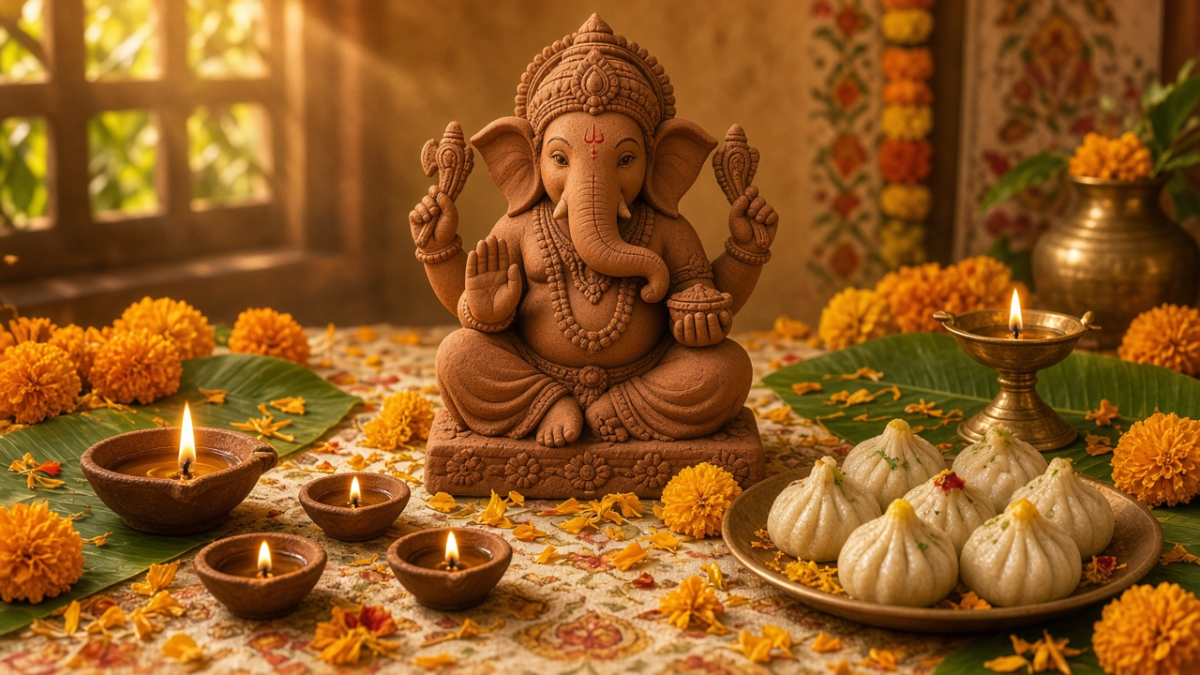
His iconography is a language of its own. The large ears suggest listening more than speaking. The trunk curves toward what is near at hand. The broken tusk, in popular lore, became a writing tool so that wisdom could be shared. The mouse at his feet reminds devotees that even restless desire can be guided. None of this needs a sermon when an idol is placed on a clean wooden stool, draped with fresh flowers, and offered a plate of steaming dumplings. The theology arrives as hospitality.
Home shrine and street pandal: two ways of keeping the same vow
Vinayaka Chavithi lives in a beautiful double register—intimate and public at once.
At home, the festival is small enough to fit on a dining table. Families bring a clay idol, clean the puja corner, light a lamp, and recite simple prayers. Children learn the names of leaves and the timing of naivedyam. Elders tell the vratha katha. Neighbors exchange laddus over the compound wall. The god is “ours” for a night or a week, and that belonging is the point.
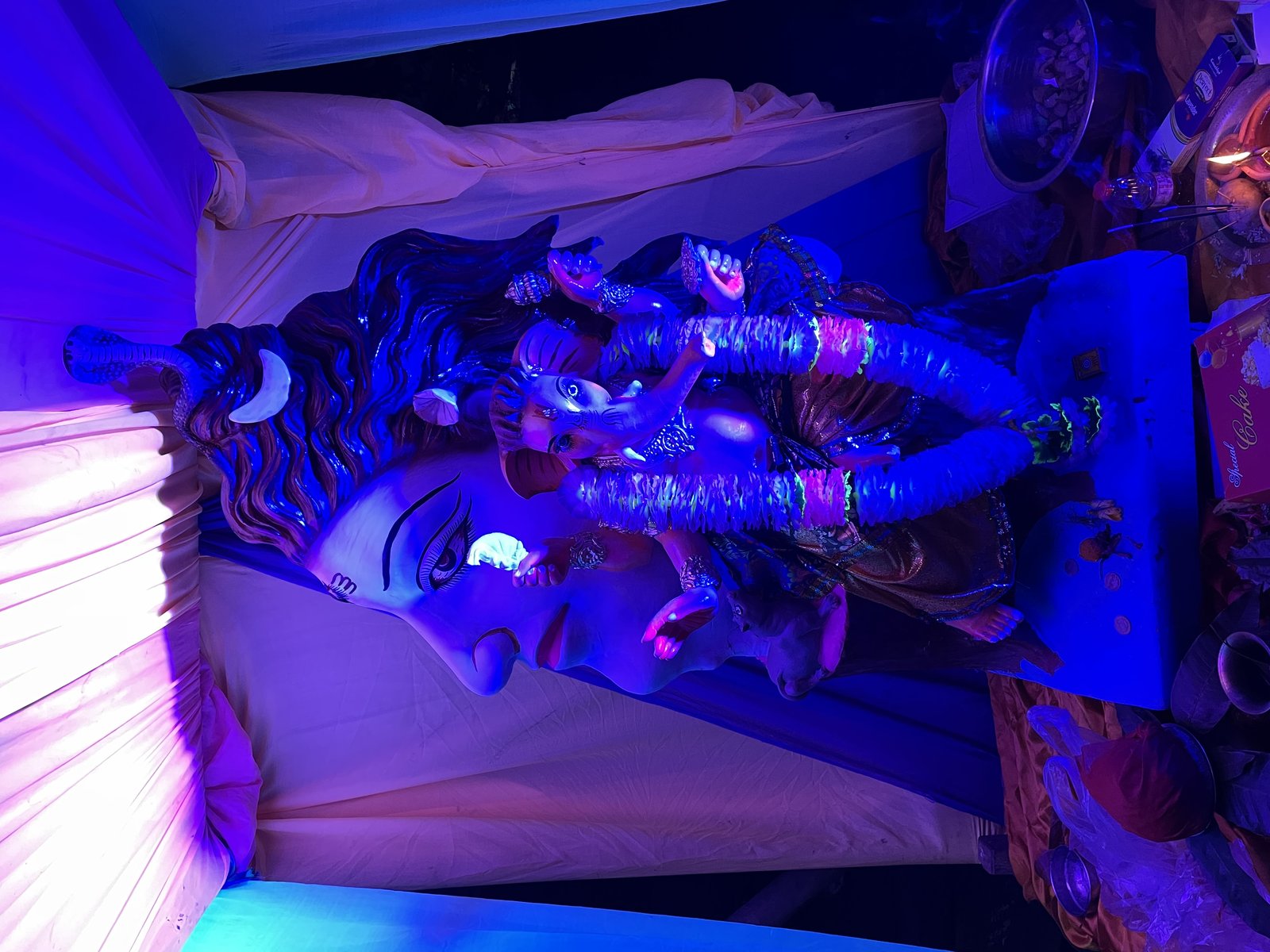
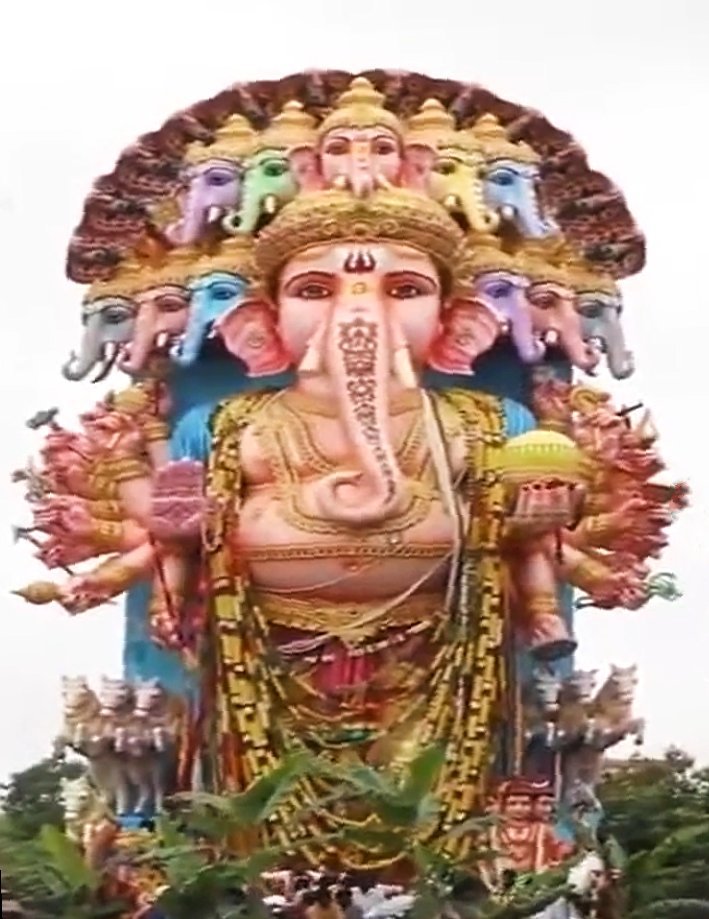
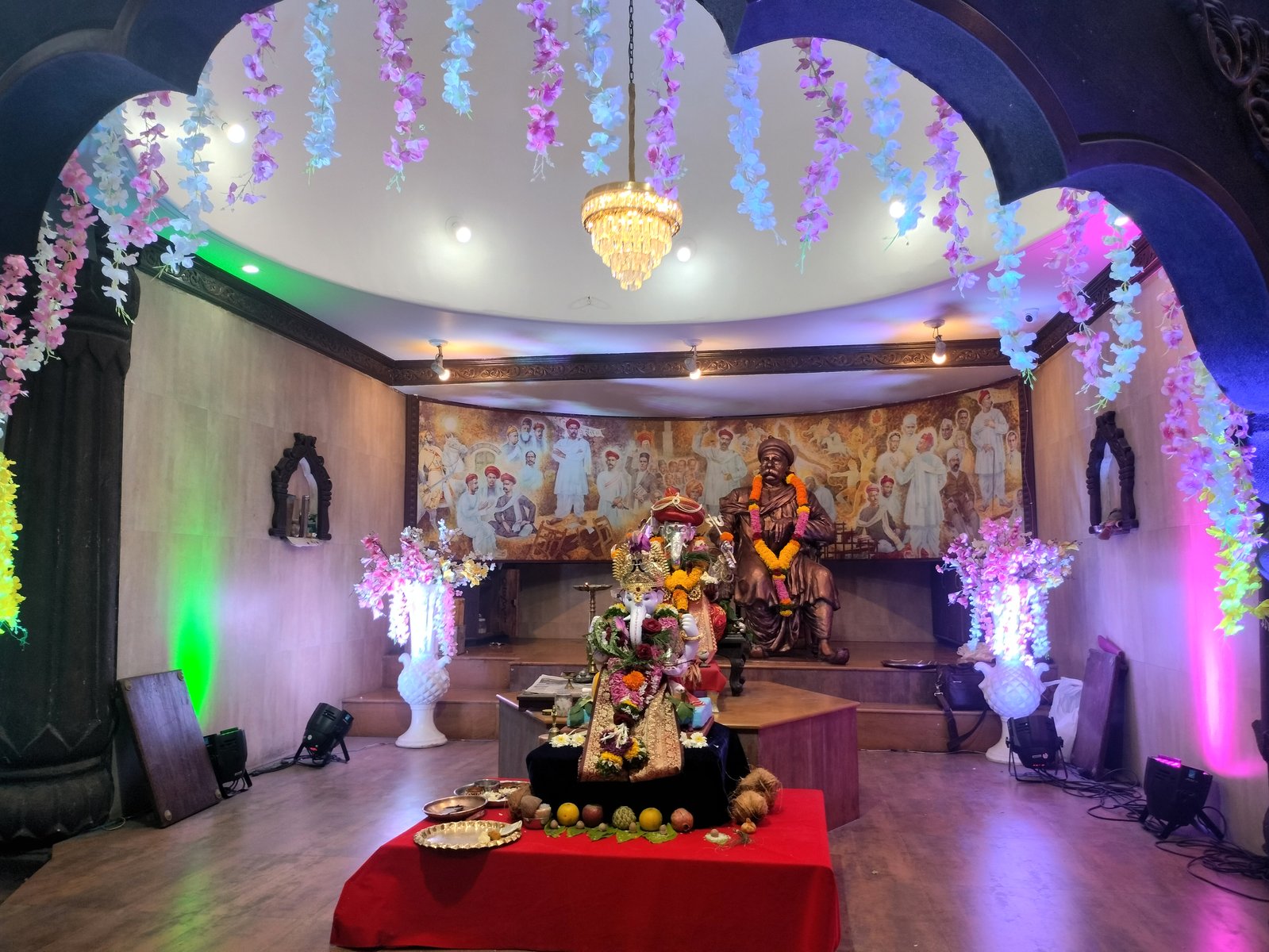
Outside, the same devotion scales up into sarvajanik—public—celebration. Streets sprout bamboo-and-cloth pandals. Loudspeakers carry bhajans and film songs with equal confidence. Artisans unveil idols taller than a house. In Hyderabad, the famous Khairatabad Ganesh becomes a pilgrimage of its own; in Mumbai and Pune, historic mandals draw crowds that feel like a moving city. Maharashtra’s public Ganeshotsav, in particular, carries a late-nineteenth-century memory: community celebrations that began to flourish in Pune around 1892—often linked with pioneers such as Bhausaheb Rangari—were soon championed and broadened by Lokmanya Bal Gangadhar Tilak, who helped turn the festival into a shared civic and cultural gathering in the colonial era. What began as devotion became, also, a school of togetherness.
Neither register cancels the other. The home idol teaches tenderness; the pandal teaches belonging. Vinayaka Chavithi needs both.
Telugu customs: matti Vinayakudu, 21 leaves, undrallu, and the moon
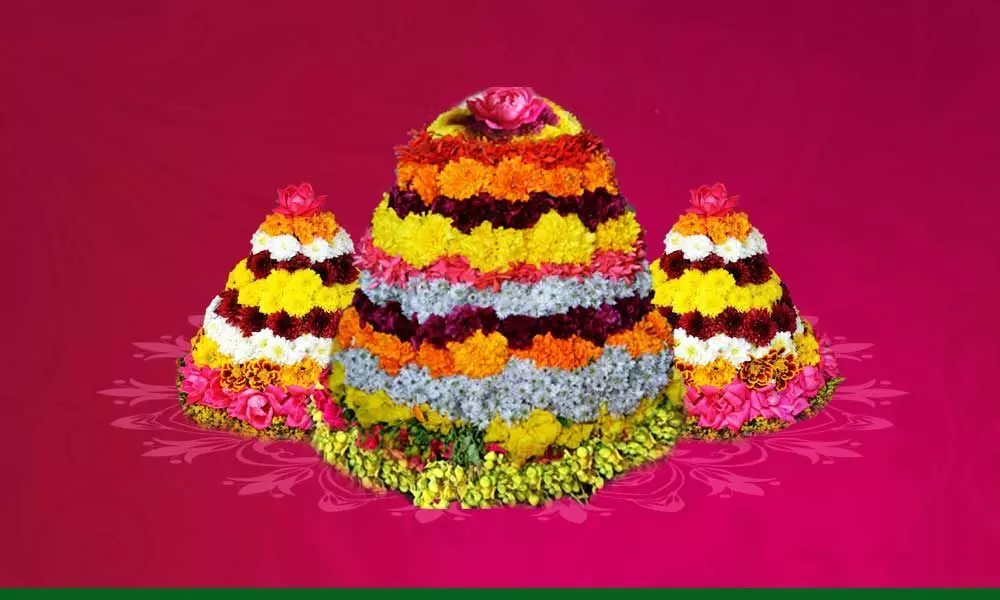
Walk into a Telugu household on Chavithi morning and the air smells of wet clay, turmeric, and ghee. The star of the day is often the matti Vinayakudu—a clay Ganesha shaped by hand or bought from a local potter. Some families also keep a small turmeric form, sometimes called Siddhi Vinayakudu, compact enough to rest in a brass plate. Clay is not only tradition; it is theology you can touch. What is fashioned from earth will, at the end, return to earth.
The puja itself can be as elaborate as a temple rite or as simple as a grandmother’s checklist. One beloved sequence is the Ekavimshati Patri—worship with twenty-one sacred leaves and herbs. Each leaf has a name and a place in memory; together they form a green rosary of attention. Children learn to hold them carefully, as if the festival were teaching botany and reverence in the same breath.
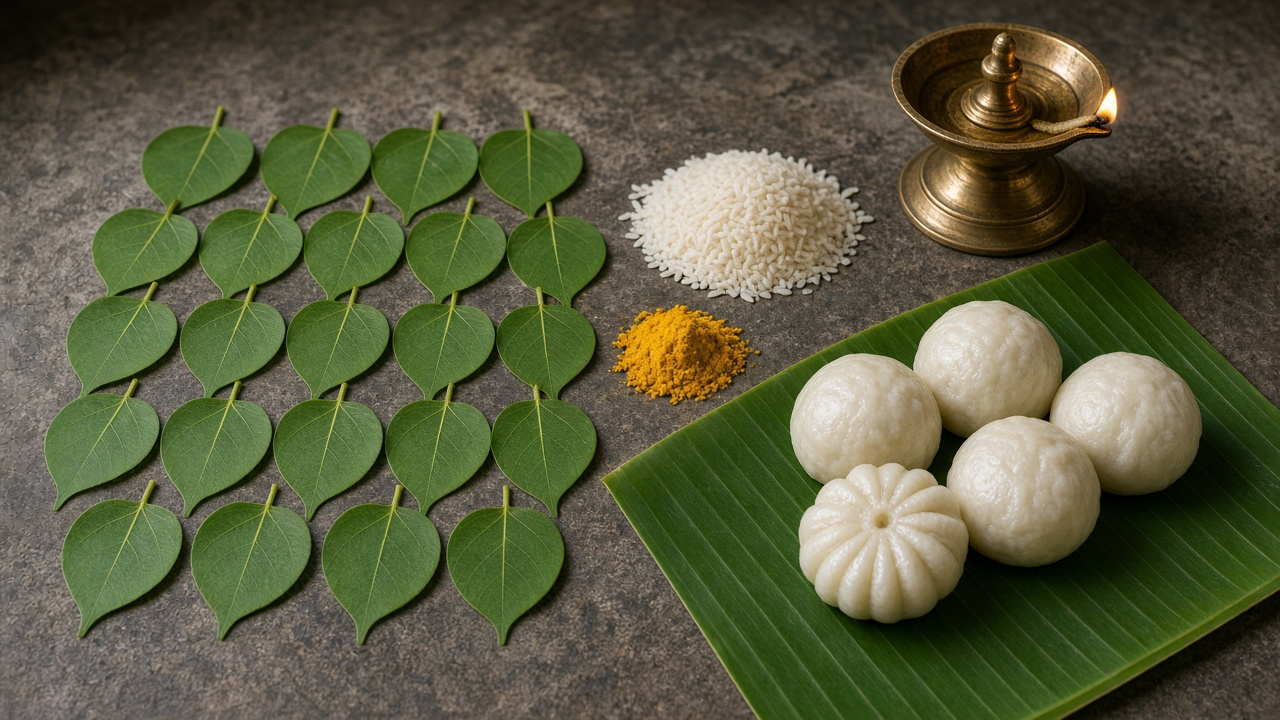
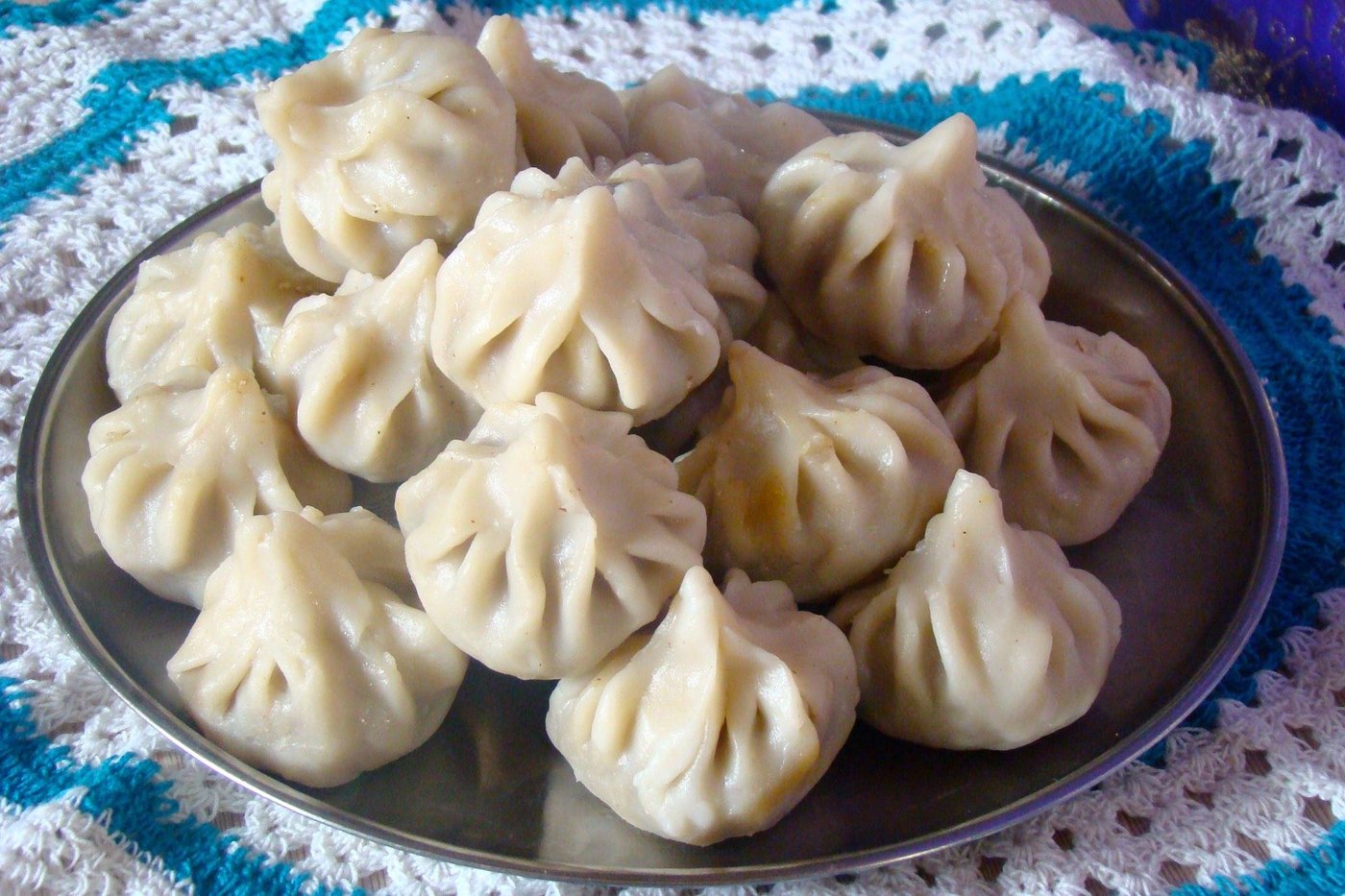
Then comes the kitchen’s offering. In Andhra–Telangana homes, undrallu (also called kudumulu)—savory steamed dumplings of rice and lentils—often appear in sets of twenty-one, echoing the leaf count. Alongside them may sit sweet modakam, coconut laddus, and seasonal fruit. The plate is not a menu so much as a conversation: we cooked; please stay; bless the house that fed you.
Evening brings story. The Vinayaka Vratha Katha includes, in many tellings, the famous caution about gazing at the moon on Chaturthi—linked in popular tradition with the Syamantaka jewel narrative and the mischief of misunderstanding. Whether a family observes the moon taboo strictly or treats it as folklore, the katha does what festival stories do best: it binds generations to a shared narrative night after night, year after year.
Public Telugu celebration has its own geography. Hyderabad’s Khairatabad idol draws devotees by the lakh. In Vijayawada and other river towns, immersions turn toward the Krishna and local waters with processions that mix devotion, drums, and civic choreography. The language of the festival may be Sanskrit in the mantra and Telugu in the joke told while tying the idol into a cart—but the feeling is unmistakable: Vinayaka has come home to the Deccan.
Visarjan: the art of saying goodbye together
Every guest must leave, and Ganesha’s farewell—visarjan, or immersion—is as central to the festival as his welcome.
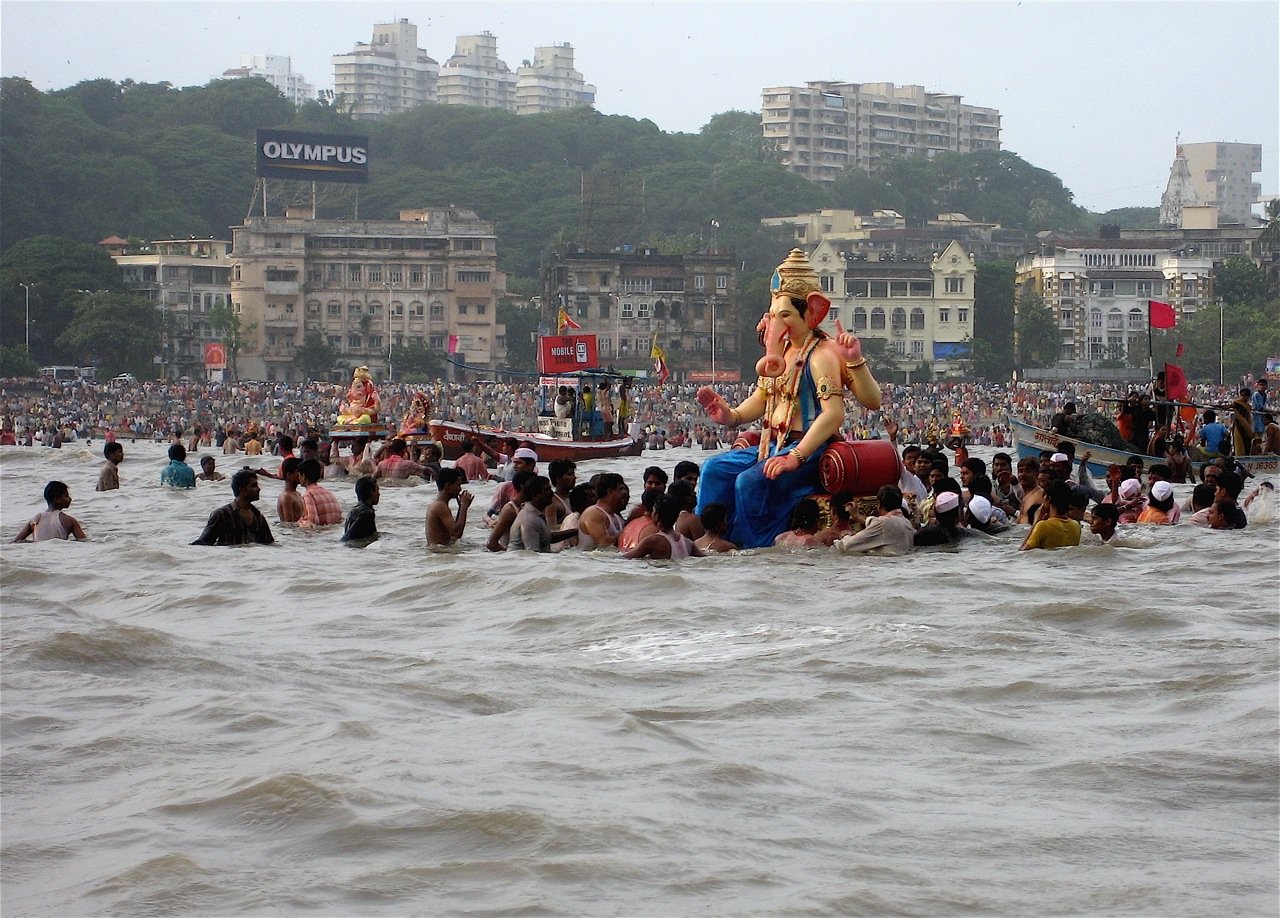
Some families immerse after a day and a half; others choose the third, fifth, or seventh day—dates that in 2026 may fall around September 15, 16, 18, or 20 depending on how a household counts. The longest public celebrations typically wait for Anant Chaturdashi on September 25, when Mumbai’s Chowpatty beaches, Pune’s riverbanks, Hyderabad’s immersion points, and countless village ponds become stages for a collective goodbye.
Processions carry the idol through familiar streets one last time. People chant Ganapati Bappa Morya. Children wave; elders wipe their eyes without apology. At the water’s edge, the form that was worshipped as presence is returned to the elements. The theological poetry is simple and profound: what was shaped for a season dissolves so that life can continue. Absence, here, is not emptiness; it is trust that beginnings can be invited again next year.
Diaspora communities—from London to New Jersey to Singapore—stage their own processions and symbolic immersions, proof that Vinayaka Chavithi travels well. The festival’s geography has widened, but its emotional grammar remains local: invite, feed, celebrate, release.
Clay, care, and an eco-minded farewell
In recent decades, India has had an honest conversation with itself about immersion. Idols made of plaster of Paris and painted with chemical colors can linger in lakes and rivers, clouding water and troubling aquatic life. Natural clay—matti, shaadu—dissolves more readily and aligns with the festival’s own symbolism of returning form to the elements. Many cities now encourage clay idols, natural pigments, and immersion in designated tanks so that sludge can be collected and, in some programs, returned to artisans for reuse.
The point is not to scold celebration. It is to keep celebration coherent. If Vinayaka teaches beginnings, an eco-minded visarjan teaches responsibility—the adult twin of joy. Choosing a clay idol, rinsing flowers separately as nirmalya, and following local immersion guidance are small acts that let devotion and rivers share the same future. In Telugu homes, the matti Vinayakudu has always whispered this lesson; the wider country is, increasingly, learning to hear it.
What unites the home stool and the towering pandal is a shared rhythm: invite, honor, feed, rejoice, release. In a country of many languages, that rhythm becomes a kind of vernacular peace. A Marathi aarti, a Telugu katha, a Konkani sweet, a Bengali neighborhood’s borrowed dhol—all of them find room under Ganesha’s wide ears. Vinayaka Chavithi does not demand uniformity; it rewards hospitality.
If you are celebrating for the first time—or explaining the day to a friend from elsewhere—start simple. Choose a clay idol if you can. Learn one prayer. Cook one offering. Walk once past a local pandal and notice how strangers become temporary kin in the glow of fairy lights. The festival’s grandeur is optional; its warmth is not.
A short reflection for September 14
On a Monday in mid-September, a lamp will be lit in a thousand kitchens before dawn. Someone will press a fingertip of turmeric paste onto a small clay forehead. Someone else will argue—affectionately—about whether the undrallu need more pepper. A loudspeaker somewhere will already be testing the day’s playlist. None of this is trivial. Festivals are how cultures rehearse their values in public and in private at the same time.
Vinayaka Chavithi—Ganesh Chaturthi in the wider Indian lexicon—asks for something deceptively simple: begin well. Clear a little space. Feed what you love. Share the street. And when the time comes, let go without bitterness, trusting that what dissolves in water can rise again in memory and in next year’s clay.
May the guest who arrives on September 14 leave your house lighter, your neighborhood kinder, and your beginnings a little braver—until Anant Chaturdashi’s farewell, and until the next Chavithi finds you ready to open the door once more.
Dates and tithi windows for 2026 are drawn from commonly cited public calendar sources (including timeanddate-style listings and Indian news festival guides); muhurat times vary by location—verify locally. Historical note on public Ganeshotsav reflects widely reported accounts of Pune’s early 1890s sarvajanik celebrations and Tilak’s role in popularizing them. Eco guidance reflects public discussion of clay versus plaster-of-Paris immersion impacts and municipal best practices.
Image credits
- Featured image & offerings still-life: AI-generated for OpenAPen.
- Pandal idol (Dibrugarh): AjayDas / Wikimedia Commons (CC BY-SA 4.0).
- Ukadiche modak: imutkarshpatil / Wikimedia Commons (CC BY-SA 4.0).
- Girgaum visarjan: Chris / Wikimedia Commons (CC BY 2.0).
- Khairatabad Ganesh: T9 NEWS Telugu / Wikimedia Commons (CC BY 3.0).
- Kesari Wada pandal: Pooja Jadhav / Wikimedia Commons (CC BY-SA 4.0).