
On 8 September 2026, Peru’s Ministry of Culture announced a discovery that heritage specialists had almost stopped expecting at Chan Chan: a nearly intact elite funerary platform, roughly six centuries old, still holding human remains and a dense assemblage of offerings. Coverage in The Art Newspaper on 18 September framed the story with unusual clarity. The platform sits in the Utzh An complex of the Chimú capital near Trujillo, on Peru’s northern coast. It is, researchers say, the only known elite funerary platform at Chan Chan that looters never reached.
That claim is not a rhetorical flourish. According to archaeologist Nadia Gamarra Carranza, speaking to The Art Newspaper, researchers have identified around nine elite funerary platforms at the site—and all of the others had been looted. Secondary burial contexts had sometimes survived intact; elite palace platforms, rich in metal, had not. The new find therefore arrives as both an archaeological windfall and a heritage parable: what sealed chambers can still teach us when a UNESCO World Heritage city has spent decades on the Danger List, battered by climate, adobe fragility, and a colonial-to-modern history of plunder.
What was found at Utzh An
The platform’s architecture is compact and deliberate. A central chamber measures 1.2 metres wide and 5 metres deep, reached by a 2.5-metre staircase. Inside lay the remains of one individual together with shell and metal objects. Two lateral chambers, each 1.5 metres wide and 8 metres long, extend the funerary programme: one held weapons and metal emblems; the other contained twenty individuals. Eighteen further individuals were found on the platform itself. In total, the remains of 38 people were reported, accompanied by jewellery, metal weapons, beads, textiles, pottery, shell and metal objects, and carved wooden boxes with metal appliqués.
Status is written into the assemblage. Jewellery, ear ornaments, and necklaces of shell and quartz mark elevated social position. One burial was placed fully extended—unusual in a Chimú funerary repertoire that typically favours flexed or seated postures. Project specialists treat that difference carefully: it may signal hierarchy within the group, or it may point toward ritual sacrifice. Either reading is provisional until bioanthropological study and full contextual analysis are complete.
Jorge Meneses, the archaeologist responsible for the project, told The Art Newspaper that the discovery’s importance “lies not only in the intact central chamber, but also in the exceptional information provided by the funerary platform.” Intactness here is methodological as much as sensational. Looting does not merely remove gold; it shreds association—who lay with what, in which order, under which pigment, beside which emblems. An undisturbed platform restores those relationships.
Why an intact elite platform is rare—and why looting history matters
Chan Chan’s misfortune and its fame are geographically entangled. The adobe capital stands close to Trujillo, the Spanish colonial city founded in 1534. “Because Chan Chan is close to Trujillo, founded in 1534, looting was immediate, as tombs contained metals,” Gamarra told The Art Newspaper. From the colonial period onward, elite tombs were magnets for extraction. What survived to the twentieth and twenty-first centuries was often architecture emptied of its richest burials—or secondary contexts that never advertised themselves as royal vaults.
Funerary platforms inside Chan Chan’s palaces were, Gamarra notes, “usually associated with Chimú rulers,” and their grandeur advertised political theatre as much as private mourning. When such spaces are looted, historians lose not only objects but the choreography of power: how rulers and high-status kin were staged among the living after death. The Utzh An platform is therefore precious less as a treasure chest than as a sealed dossier. Meneses describes the central chamber as “a final photograph of a much longer process: the veneration of an ancestor belonging to a group politically linked to the Chimú Kingdom.” In Andean thought, he adds, “death did not necessarily mean the end of the relationship with the deceased.”
That framing matters for international readers tempted to see “tomb discovery” headlines as pure spectacle. The scientific value of an unlooted platform is sequence, association, and ritual time—not a checklist of precious metals.
Chan Chan: adobe megacity, UNESCO inscription, Danger List
Chan Chan was the capital of the Chimú Kingdom (Chimor), which reached its apogee in the fifteenth century before falling to the Inca. UNESCO inscribed the Chan Chan Archaeological Zone as a World Heritage Site in 1986 under criteria (i) and (iii). The same year, at Peru’s request and on the Committee’s recommendation, the property was placed on the List of World Heritage in Danger—and it has remained there. Recent Committee decisions have reiterated retention on the Danger List while monitoring management, buffer-zone regulation, illegal occupation, and ongoing conservation.
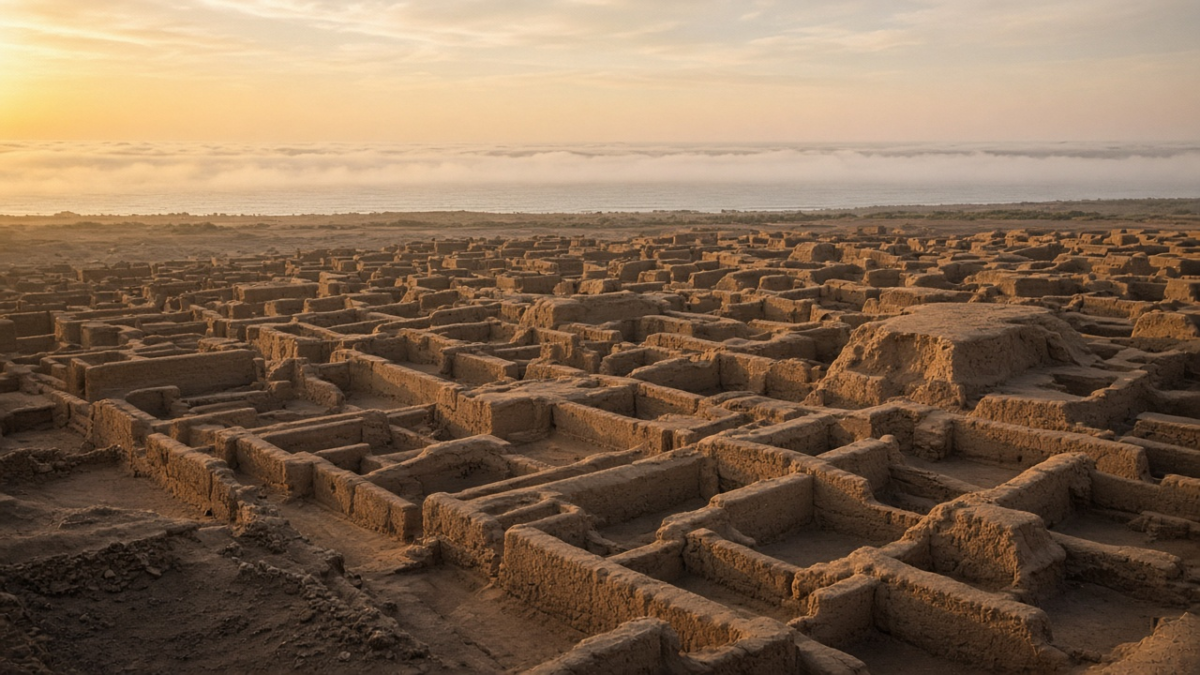
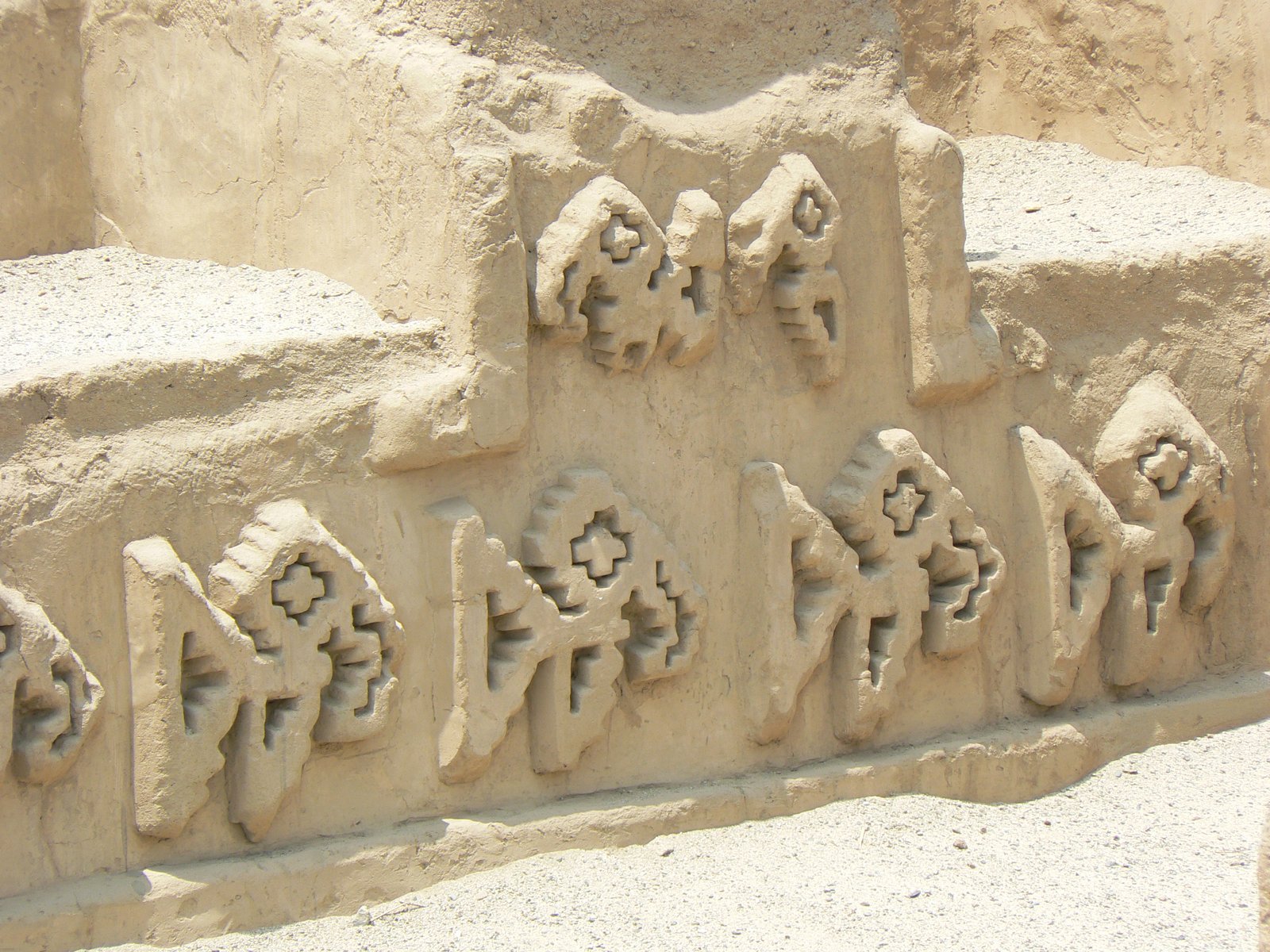
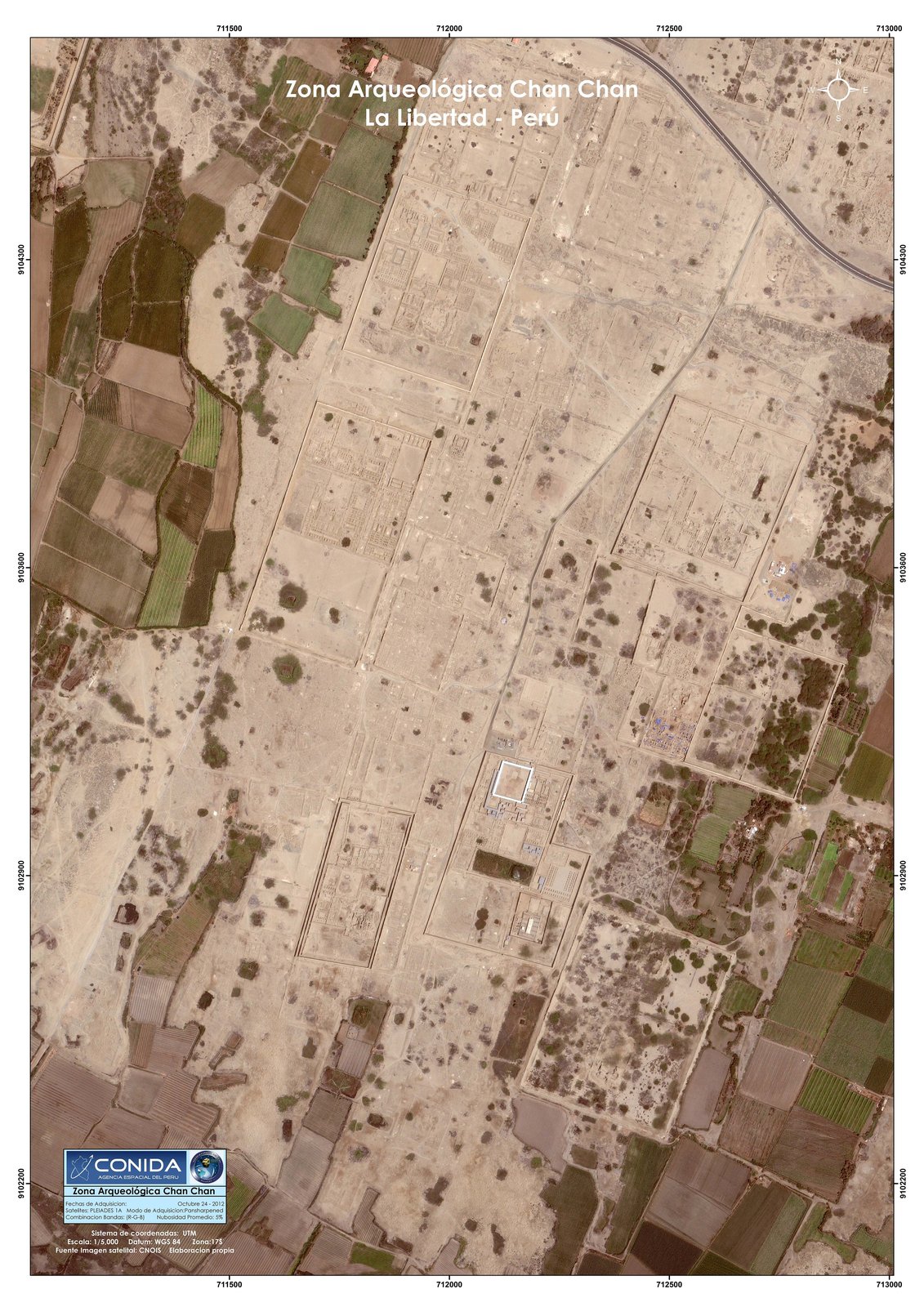
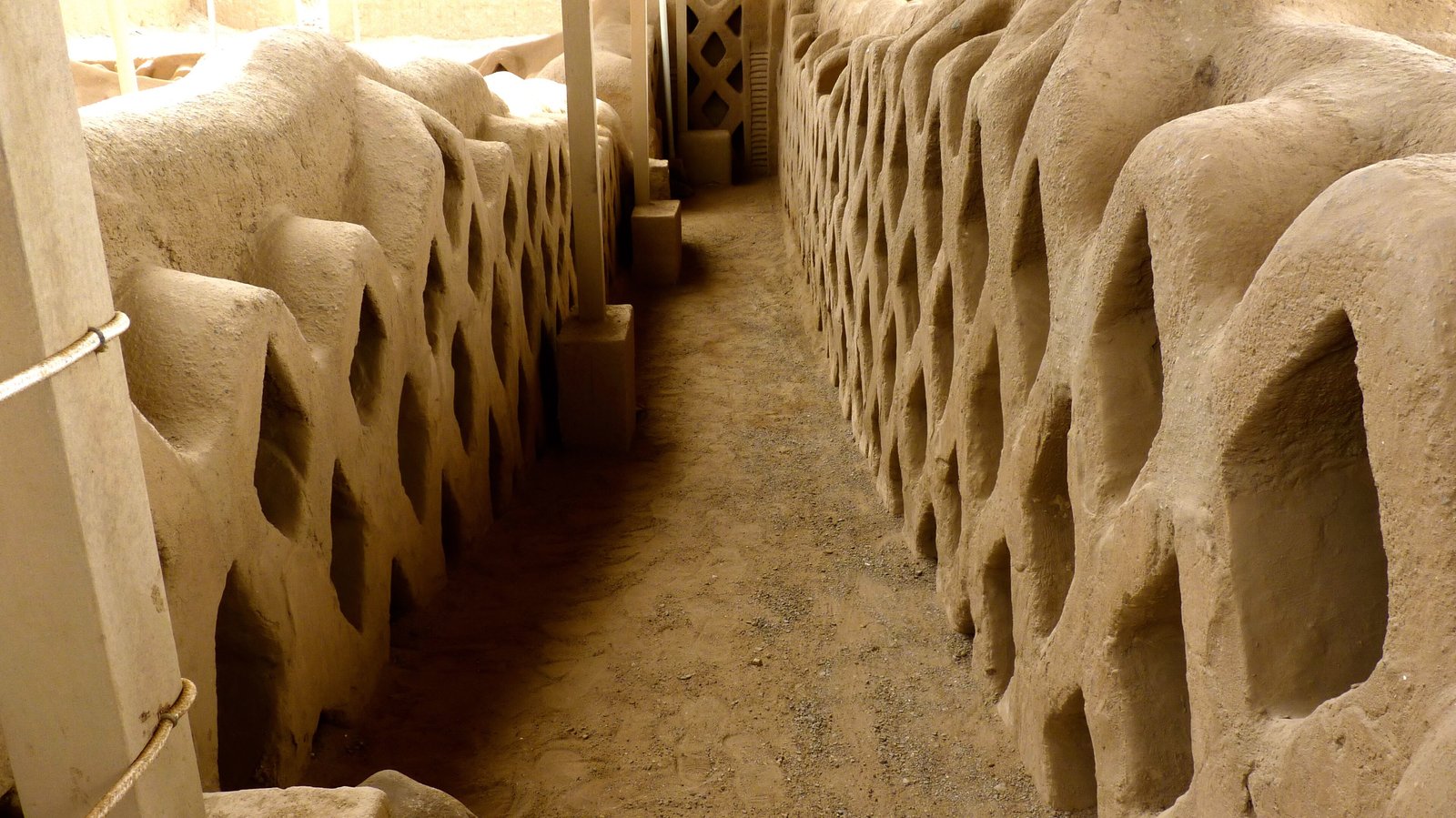
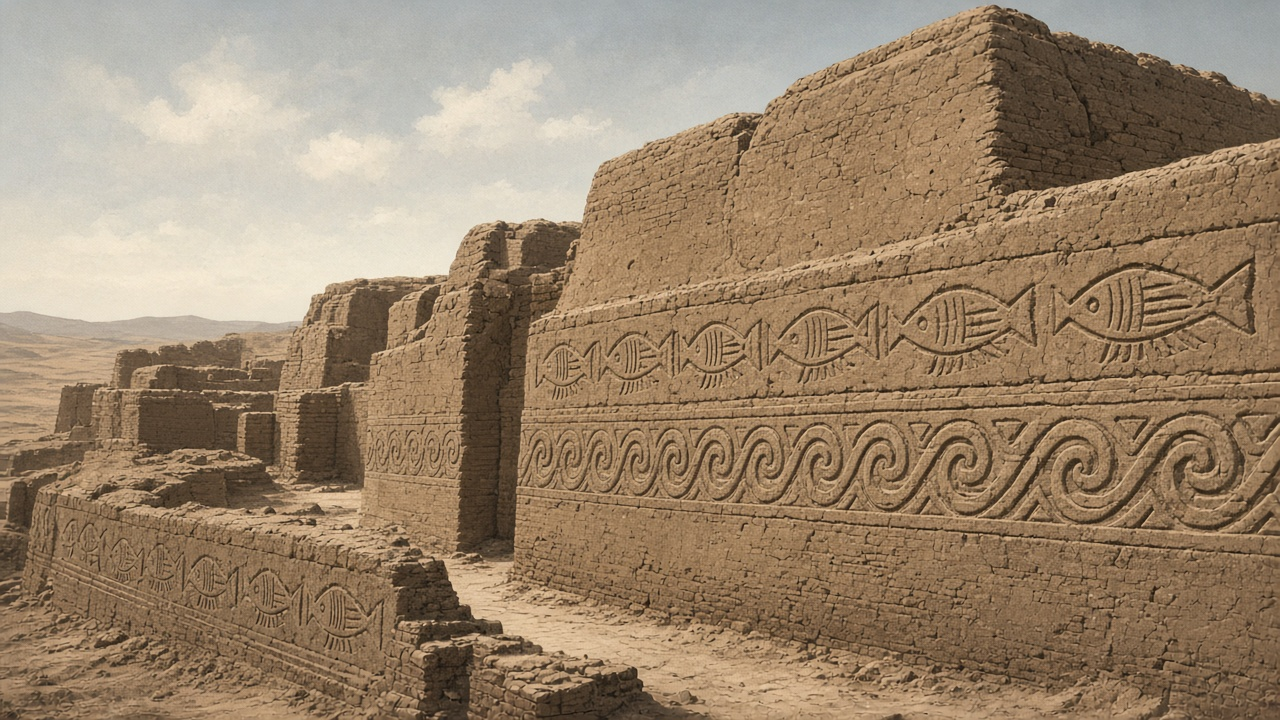
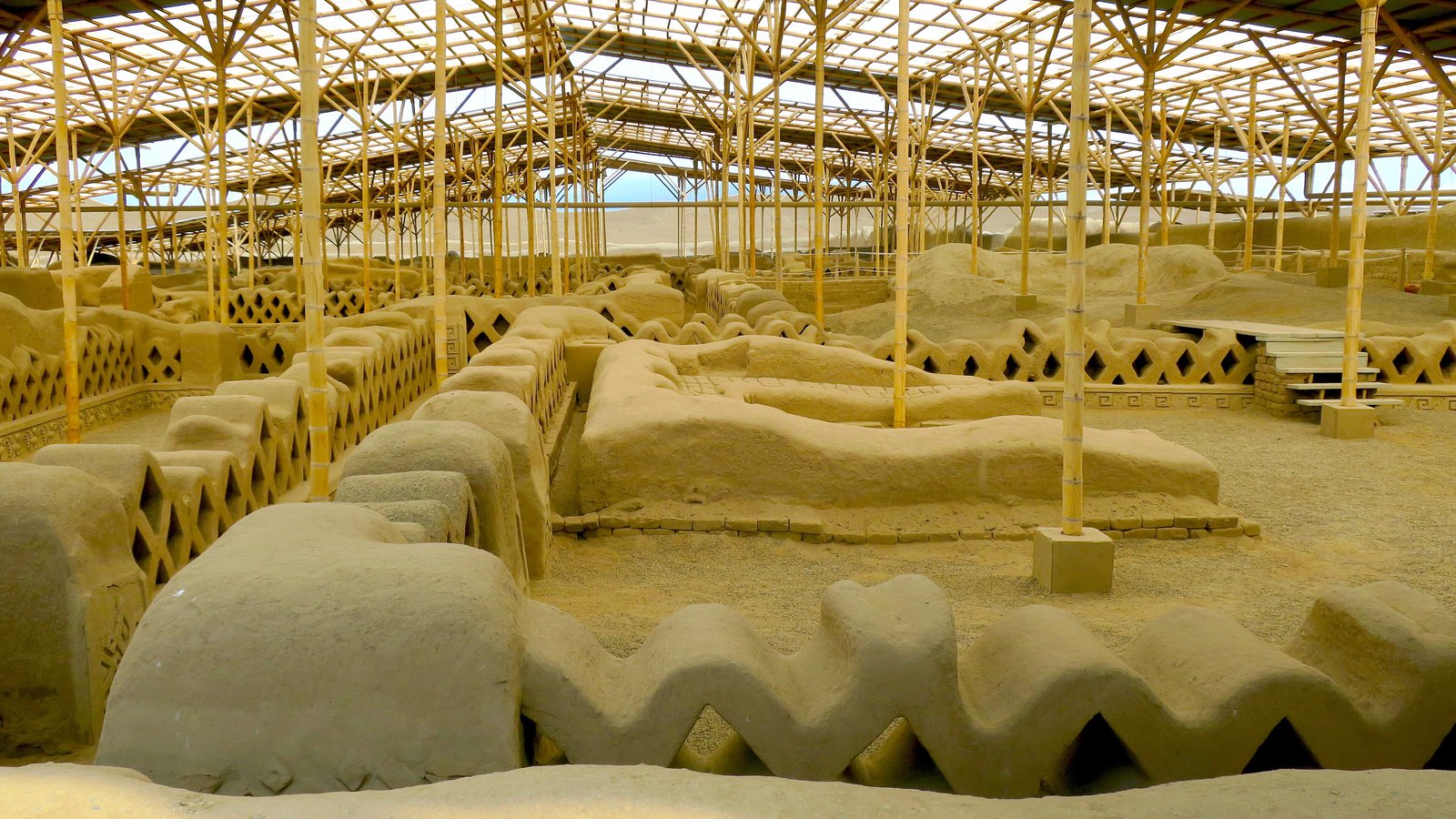
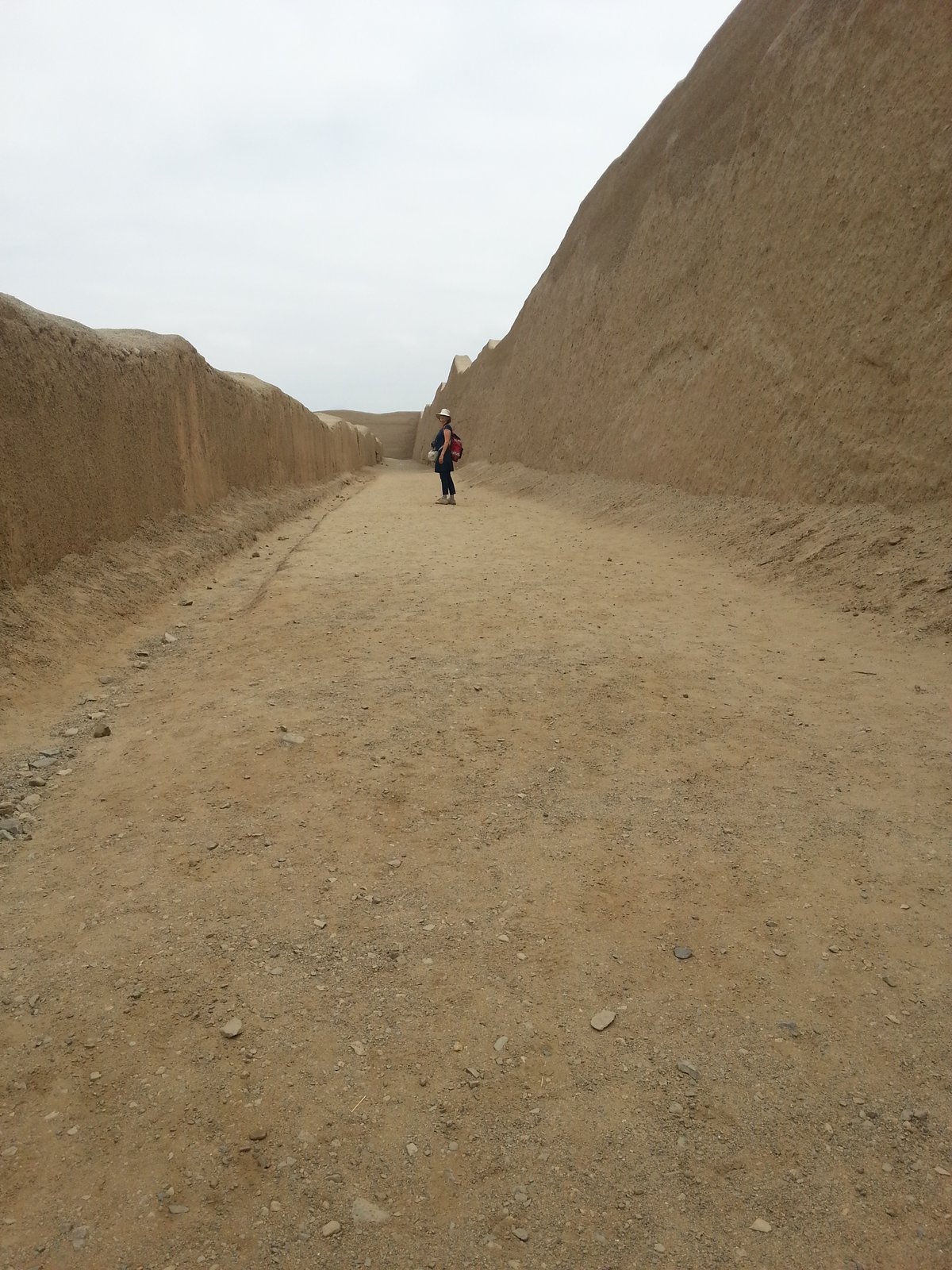
UNESCO’s description of Outstanding Universal Value stresses what visitors still feel on the ground: Chan Chan was the largest earthen-architecture city in pre-Columbian America. Its monumental core covers around six square kilometres within a once-larger urban footprint. Nine great rectangular complexes—often called citadels or palaces—are delineated by high, thick earthen walls. Around open spaces stand temples, residences, storehouses, reservoirs, and funeral platforms. Walls carry friezes with abstract, anthropomorphic, and zoomorphic motifs. Beyond the nine complexes, UNESCO notes dozens of semi-monumental compounds and production sectors for crafts such as weaving, woodworking, and metalworking, together with agricultural areas and remnants of irrigation systems in the Moche (Santa Catalina) valley between the Pacific and modern Trujillo.
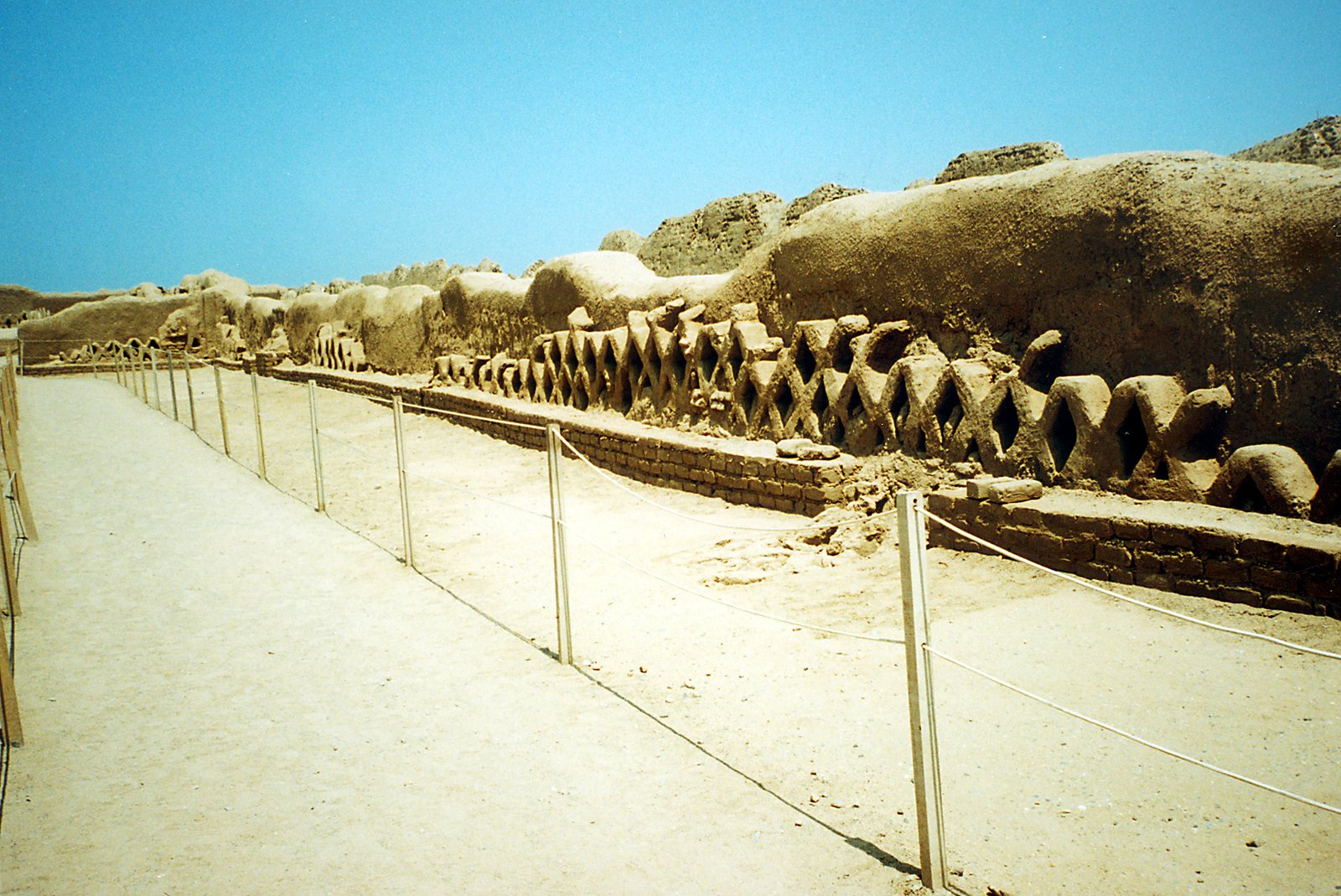
Adobe is both Chan Chan’s glory and its vulnerability. Earthen walls, once exposed to air and rain, erode quickly. El Niño–Southern Oscillation (ENSO) events deliver intense rainfall to Peru’s northern coast; rising water tables and humidity compound the damage. UNESCO’s own threat summaries since 1986 have also named endemic plundering and development pressures. A site that announced the sophistication of Chimú statecraft in mudbrick now depends on continuous maintenance, disaster-risk planning, and legal protection—work that must accompany excavation rather than lag behind it.
Chimú society and the living politics of ancestors
Chimú political order is visible in urban layout: segmented palaces, controlled circulation, craft quarters, and hydraulic infrastructure supporting intensive coastal agriculture. Funerary ritual sat inside that order. “This is reflected in the grandiose funerary platforms found within Chan Chan’s palaces, usually associated with Chimú rulers,” Gamarra explains. Burial was not only disposal; it was governance by other means—anchoring lineage, memory, and legitimacy in architecture.
Ancestor veneration in the Andes often involved more than a single interment. Chimú communities are documented as having exhumed ancestors so that remains could participate in plaza rituals. Death was relational. Ari Caramanica, an anthropologist at Vanderbilt University, told The Art Newspaper that the Utzh An discovery “provides a nearly complete picture of a context of intense meaning centred on an elite individual—the node of power around which choreographies of the living and dead would have been directed.” The phrasing is careful: the platform is a stage for ongoing social life, not a sealed goodbye.
Henry Gayoso Rullier, Chan Chan’s head of research, has also noted that the find may eventually yield clues about how and when the Inca later occupied the city—another reminder that Chan Chan’s biography did not end with Chimú independence. Conquest layers, reuse, and abandonment are part of the same long archive as the elite ancestor at the platform’s centre.
Cinnabar, ornaments, and elite funerary signature
Among the material markers that most clearly signal elite funerary practice is red pigment on some skulls and pottery. Gayoso identifies it as likely mercury sulfide—cinnabar—and places it in a wide Central Andean tradition. “This pigment, likely mercury sulfide, known as cinnabar, is present across the Central Andes,” he told The Art Newspaper. “It was used in pottery, murals, on warriors’ bodies, in sacrifices and on funerary masks covering the bodies and faces of the deceased.” In Chimú elite contexts, he notes, the association is especially strong.
Read alongside jewellery, ear ornaments, shell-and-quartz necklaces, metal emblems, and weapons, cinnabar helps distinguish a politically charged burial programme from ordinary interment. None of these markers should be sensationalised. They are evidence of status, ritual labour, and long-distance material knowledge—mercury mineral transformed into colour that marked bodies at the threshold of death. For conservators, they are also fragile chemistry that must be stabilised before any public display.
What bioanthropology may still reveal
Excavation is not the end of the research arc. Sinthya Cueva, Chan Chan’s research programme director, says work will continue through 2027. The objects and human remains are under analysis. “Bioanthropological studies can reveal the age, sex and diet of the remains, along with biological connections between them,” Cueva told The Art Newspaper. She also situates the discovery inside a research programme that began in 2015—an important corrective to the idea that major finds appear from nowhere. Systematic survey and multi-year excavation created the conditions for recognising an unlooted platform when it finally appeared.
Bioanthropology, pursued ethically and under Peruvian heritage law, can test hypotheses that architecture and offerings only suggest. Were the twenty individuals in one lateral chamber demographically similar? Do isotopic signatures of diet distinguish coastal elites from hinterland dependents? Do skeletal indicators of stress, trauma, or kinship align with the unusual extended burial? Answers will be probabilistic and incomplete, but they will be grounded in the bodies themselves rather than in looters’ empty pits.
Conservation first: climate, adobe, and the ethics of display
Roxana Loayza, the site’s conservator, stated the priority with unsentimental clarity: “Before considering storage or exhibition, it is necessary to evaluate each material and establish the conditions to preserve it.” Textiles, wood with metal appliqués, pigments, human remains, and adobe architecture each demand different microclimates and handling protocols. Premature exhibition would risk destroying the very associations that make the platform scientifically unique.
Those laboratory and storage challenges sit inside a larger landscape of climate risk. Chan Chan’s earthen walls cannot be “finished” once and left alone. El Niño rains, wind erosion, salt crystallisation, and rising water tables act continuously. UNESCO and Peruvian authorities have, for years, linked Danger List retention to incomplete corrective measures—among them buffer-zone delimitation, regulation of illegal occupation, integration of management plans with other planning instruments, and sustained conservation funding. The Utzh An discovery raises the stakes: every newly opened chamber increases the surface area of fragile materials requiring care.
There is also a public ethics question. International audiences often encounter Andean archaeology through museum gold and dramatic burial photographs. Responsible coverage—and responsible site management—keeps human remains within frameworks of dignity, scientific necessity, and national law. The story worth telling is not gore or treasure; it is the rare survival of context in a city that was stripped for metals almost as soon as Spaniards founded Trujillo nearby.
Why international audiences should care
Chan Chan is not a remote curiosity. It is a primary document of urbanism built in earth—proof that political complexity, craft specialisation, and monumental planning flourished on Peru’s desert coast without stone temples as the only measure of civilisation. It is also a live test of whether the World Heritage system can protect sites that are environmentally fragile and historically looted. An unlooted Chimú elite platform does not remove Chan Chan from the Danger List. It does show what careful, multi-year research can still recover when protection and archaeology move together.
For readers outside Peru, the stakes are comparative as well as humanitarian. Coastal megacities of adobe face climate volatility that many stone heritage sites do not. Communities near Trujillo live beside a capital whose walls encode Chimú history even as ENSO seasons threaten to dissolve them. Scholars of religion and politics gain a clearer view of ancestor-centred power. Conservators gain a case study in sequencing excavation, analysis, and display. And the global public gains a reminder that “discovery” headlines are only as valuable as the contexts they leave intact.
Meneses’s “final photograph” metaphor is apt. The Utzh An platform freezes one moment in a longer relationship between the living and an elite ancestor. Whether bioanthropology, conservation science, and continued excavation through 2027 can enlarge that photograph without blurring it will decide how much of Chimú Chan Chan the twenty-first century is allowed to keep.
Sources and further reading
- Constanza Ontiveros Valdés, “600-year-old funerary platform discovered in Peru,” The Art Newspaper, 18 September 2026 — https://www.theartnewspaper.com/2026/09/18/funerary-platform-discovered-peru-chan-chan-chimu (Ministry of Culture announcement dated 8 September 2026; quotes from Nadia Gamarra Carranza, Jorge Meneses, Henry Gayoso Rullier, Ari Caramanica, Sinthya Cueva, Roxana Loayza).
- UNESCO World Heritage Centre — Chan Chan Archaeological Zone (inscription 1986; criteria i & iii; Outstanding Universal Value; Danger List since 1986).
- UNESCO World Heritage Centre — Threats to the Site (adobe erosion, El Niño vulnerability, plundering; Danger List 1986–present).
- UNESCO World Heritage Centre — Preventing climate-related impacts in the Chan Chan Archaeological Zone (Peru) (disaster risk reduction and climate adaptation context).
- UNESCO World Heritage Committee — Decision 48 COM 7A.35 (retention of Chan Chan on the List of World Heritage in Danger; Desired state of conservation measures).
- UNESCO World Heritage Committee — Decision 10 COM VIII (1986 inscription on the World Heritage List and simultaneous Danger List placement).
Editorial note: Human remains are discussed only as archaeological evidence of funerary practice and research potential. No graphic description is intended. This feature was prepared for OpenAPen local files only and was not published to WordPress.
Image credits
- Featured image & frieze illustration: created for OpenAPen (AI-assisted).
- Adobe frieze detail: Kevstan / Wikimedia Commons (CC BY-SA 3.0).
- Aerial Chan Chan: Ministerio de Defensa del Perú (PerúSat-1) / Wikimedia Commons (CC BY 2.0).
- Ciudadela: Riccardo Specchia / Wikimedia Commons (CC BY-SA 4.0).
- Adobe walls: Håkan Svensson / Wikimedia Commons (CC BY-SA 3.0).
- Site overview: AlisonRuthHughes / Wikimedia Commons (CC BY-SA 4.0).
- Trujillo region view: Jean-François Capdet / Wikimedia Commons (CC BY 3.0).