

Each October, the Nobel Prizes remind us how far curiosity and persistence can take humanity. The 2025 laureates—from quantum engineers to molecular architects, immune pioneers, literary visionaries, democracy defenders, and growth economists—span six disciplines yet share one purpose: turning deep ideas into real-world impact. This 2025 year’s awards honour discoveries that decode the immune system’s self-control, build materials that capture carbon and water, wire quantum mechanics into circuits, defend democratic values, illuminate the human condition, and explain innovation-driven prosperity.
Explore below what each set of laureates achieved, why it matters, and how their work is shaping science, society, and the planet’s future.
Nobel Prize – How many fields & what they are
- The original prizes, established by Alfred Nobel in his will (1895), covered five fields:
- Physics
- Chemistry
- Physiology or Medicine
- Literature
- Peace (NobelPrize.org)
- A sixth prize was later added: the Sveriges Riksbank Prize in Economic Sciences in Memory of Alfred Nobel (commonly called the Nobel Prize in Economics), established in 1968. (Wikipedia)
- Therefore there are six fields in which laureates are selected each year (assuming the economics prize is included). (Wikipedia)
How many prizes / laureates overall
- According to data from the official website: between 1901 and 2025 the prizes (all categories) have been awarded 633 times to 1,026 people and organisations. (NobelPrize.org)
- (Note: Because some laureates receive more than one prize, the number of unique individuals is slightly different.)
The 2025 Laureates by Field
Here are the winners in each of the six fields for 2025: (Wikipedia)
- Physics: John M. Martinis, Michel H. Devoret, John Clarke — “for the discovery of macroscopic quantum mechanical tunnelling and energy quantisation in an electric circuit”
- Chemistry: Omar M. Yaghi, Susumu Kitagawa, Richard Robson — “for the development of metal-organic frameworks”
- Physiology or Medicine: Mary E. Brunkow, Fred Ramsdell, Shimon Sakaguchi — “for their discoveries concerning peripheral immune tolerance”
- Literature: László Krasznahorkai — “for his compelling and visionary oeuvre that, in the midst of apocalyptic terror, reaffirms the power of art.”
- Peace: María Corina Machado — “for her tireless work promoting democratic rights for the people of Venezuela and for her struggle to achieve a just and peaceful transition from dictatorship to democracy.”
- Economic Sciences: Joel Mokyr, Philippe Aghion, Peter Howitt — “for having identified the prerequisites for sustained growth through technological progress / for the theory of sustained growth through creative destruction.”
Physics — Macroscopic quantum effects in electric circuits

Laureates: John Clarke, Michel H. Devoret, John M. Martinis.
What they did: Proved that unmistakably quantum phenomena—tunnelling and discrete energy levels—can be engineered and directly observed in macroscopic electrical circuits (Josephson/LC-like systems). Their precision experiments turned abstract quantum rules into controllable hardware, laying foundations for quantum sensors and today’s quantum-information devices. (NobelPrize.org)
Why it matters: Once you can “wire up” quantum mechanics, you can build ultrasensitive magnetometers and the building blocks of quantum computers, cryptography, and sensors. (NobelPrize.org)
Sources / backlinks: Nobel press release & summary; Reuters wrap. (NobelPrize.org)
Chemistry — Metal–Organic Frameworks (MOFs)

Laureates: Susumu Kitagawa, Richard Robson, Omar M. Yaghi.
What they did: Invented and developed MOFs—crystalline “molecular scaffolds” made by linking metal nodes with organic linkers to create enormous internal surface areas and tunable pores. Robson pioneered extended coordination frameworks; Kitagawa showed genuine gas adsorption and “soft porous crystals” that flex with guests; Yaghi coined MOFs and advanced “reticular chemistry,” enabling thousands of designed structures (e.g., MOF-5). (NobelPrize.org)
Why it matters: MOFs can capture CO₂, store H₂/CH₄, extract water from desert air, and filter pollutants—turning a designable crystal into a platform for climate, water, and separation tech. (NobelPrize.org)
Sources / backlinks: Nobel press release & popular info; Reuters explainer. (NobelPrize.org)
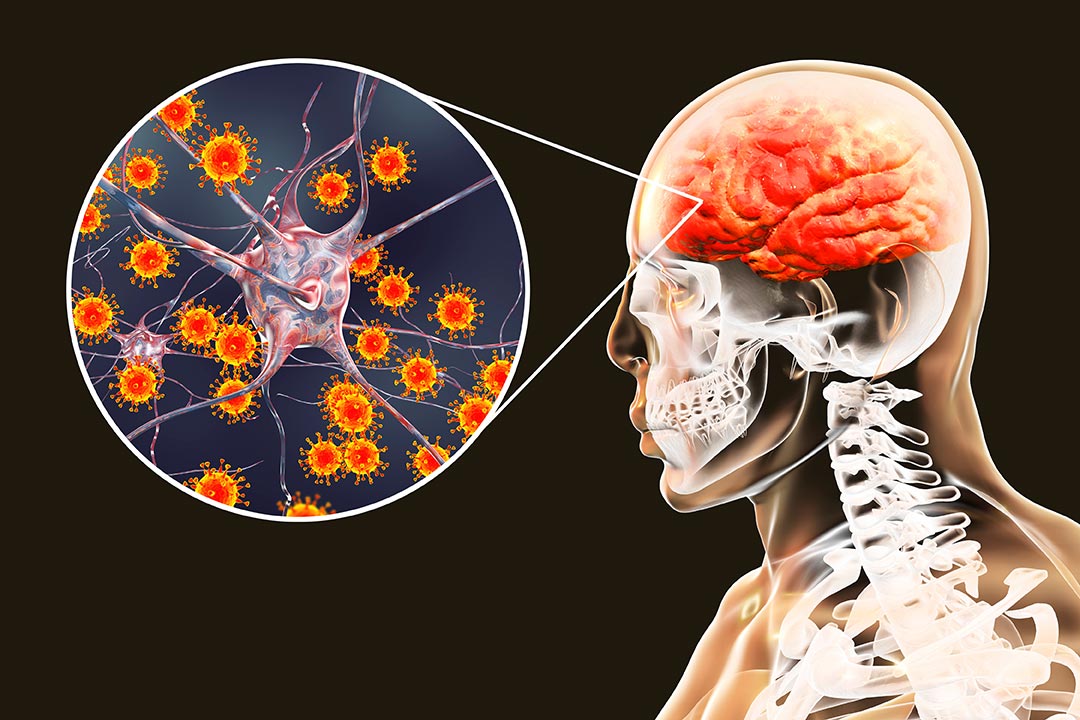
Physiology or Medicine — Peripheral immune tolerance

Laureates: Mary E. Brunkow, Fred (Frederick J.) Ramsdell, Shimon Sakaguchi.
What they did: Solved how mature immune systems avoid self-attack. Sakaguchi discovered regulatory T cells (CD4⁺CD25⁺ T-regs) that suppress autoimmunity; Brunkow & Ramsdell identified FOXP3 as the master transcription factor of T-regs (mutations cause IPEX), providing the molecular key to immune “brakes.” Together they established peripheral tolerance as a second line of defense beyond thymic deletion. (NobelPrize.org)
Why it matters: T-regs/FOXP3 are central to autoimmunity, transplantation tolerance, allergy, and even cancer (where T-regs can hinder anti-tumor responses). Therapeutic modulation of T-regs is now a major translational frontier. (NobelPrize.org)
Sources / backlinks: Nobel press release & popular info. (NobelPrize.org)
Literature — László Krasznahorkai

Laureate: László Krasznahorkai (Hungary).
What he did: Honored “for his compelling and visionary oeuvre that, in the midst of apocalyptic terror, reaffirms the power of art.” His work—formally daring, hypnotic sentences; grim yet transcendent panoramas—reworks Central European history and metaphysics into singular prose. (Great blog tip: cite Satantango and The Melancholy of Resistance as gateways.) (NobelPrize.org)
Why it matters: Recognizes literature that pushes the form itself while confronting modern dread—yet insists on art’s redemptive force.
Sources / backlinks: Nobel summary & facts page. (NobelPrize.org)
Peace — María Corina Machado

Laureate: María Corina Machado (Venezuela).
What she did: Recognized “for her tireless work promoting democratic rights for the people of Venezuela and for her struggle to achieve a just and peaceful transition from dictatorship to democracy.” The Committee frames her as an emblem of civilian courage in defending fundamental democratic freedoms. (NobelPrize.org)
Why it matters: Signals support for non-violent democratic movements amid backsliding worldwide and aims to fortify global norms around elections, speech, and peaceful transition. (NobelPrize.org)
Sources / backlinks: Nobel press release, summary, and laureate interview highlight. (NobelPrize.org)
Economic Sciences — Innovation-driven growth

Laureates: Joel Mokyr; Philippe Aghion & Peter Howitt.
What they did: Explained how knowledge and innovation sustain long-run growth.
- Mokyr: Identified the cultural/institutional pre-conditions that let useful knowledge accumulate and translate into technological progress (why modern growth began and persisted).
- Aghion–Howitt: Built the “creative destruction” growth framework where incumbent technologies are constantly displaced by better ones—pinning productivity and policy debates to innovation dynamics. (NobelPrize.org)
Why it matters: Offers tools for countries to foster innovation ecosystems, competition, and education—guardrails against stagnation and roadmaps for inclusive prosperity. (NobelPrize.org)
Sources / backlinks: Nobel press & popular information pages. (NobelPrize.org)
Quick references for extended reading (all official pages)
- All Nobel Prizes 2025 (hub): overview & links. (NobelPrize.org)
- Announcement week (dates): 6–13 Oct 2025. (NobelPrize.org)